
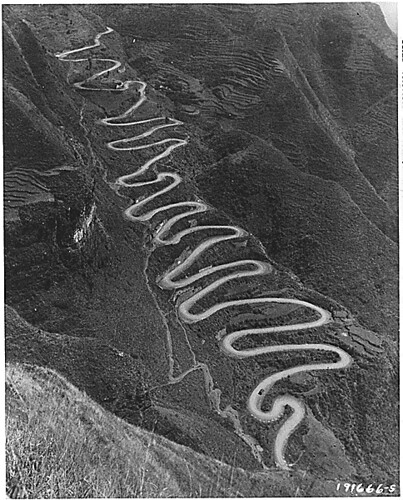
“It was a road some said couldn’t be built. Most of the men ordered to make it happen were African American soldiers sorted into Army units by the color of their skin.
As World War II raged, they labored day and night in the jungles of Burma, sometimes halfway up 10,000-foot mountains, drenched by 140 inches of rain in the five-month monsoon season. They spanned raging rivers and pushed through swamps thick with bloodsucking leeches and swarms of biting mites and mosquitoes that spread typhus and malaria.
Some died from disease or fell to their deaths when construction equipment slid along soupy mud tracks and dropped off cliffs. Others drowned, or were killed pulling double duty in combat against the Japanese.”
These are the excerpt from the Stilwell Road: Burma’s Stilwell Road Revive, an article recently published in Los Angeles Times.
The article describe briefly the history of famous Stilwell Road and how India and China are trying to restore, revive and reopen this important land link between the two Asian powers. Morefamously known as Ledo Road, it is built during the World War II by allied to supply China which was underseige by Japanese Imperial Army. However, the Ledo road could not be opened until 1945, and supplies carried over the Ledo Road never reached the capacity carried by air. Soon after the opening of Ledo Road, Burma was leberated from Japanese army, and War ended shortly afterwards.
Dear
You giving great information to those willing to visit Myanmar. We are a group of 150 members planning to visit & tour Myanmar. Liesure tour is the purpose. I have read old posts & know that it is impossible to enter myanmar by broad. But the posts are 3 years old, what is the condiotion now a days. Can we reach Mandalay by road from Manipur. I learnt that road have been opened up for Indian tourists after Indian dlegates March 2011 visit to Myanmar. Somee 22 trade sectors are opened between Myanmar & India including Tourism.
As far as I know. The border is still closed for tourists. And the road in Manipur is not also safe due to insurgency. The Tamu-Morai border check point is only open for trade.
My husband is doing a project on the Stilwell Road, and we would like to travel along the length from Muse to Pangsau. We are looking to hire a car with an english-speaking driver for about two weeks.
We have done the Chinese side – from Kunming to Ruili/Muse and the Indian side till Nampong last December.
We will be flying to Mandalay from Bangkok. I am welcome to suggestions from Mandalay itself; maybe drive to Bhamo?
Kindly advice.
Currently, the route you are planning to travel does not have good security as there are ongoing fightings between government forces and Kachin independent forces. You should be very careful around there.